
 Brazil
Regulation
Brazil's Supreme Court pauses municipal lottery case for wider gambling review
Brazil's Supreme Federal Court suspended its 4 November hearing on municipal lotteries, with judges seeking to coordinate related betting and gambling cases. No final ruling or restart date was announced.
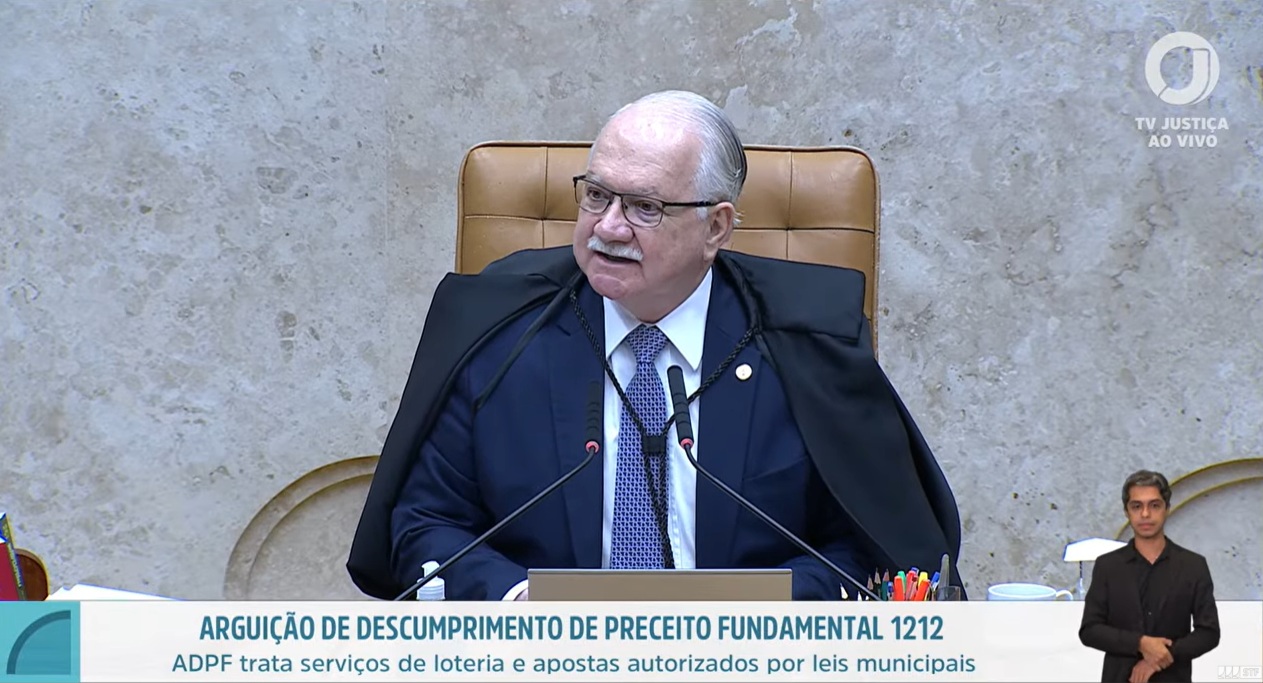
What happened on 4 November
Brazil's Supreme Federal Court (STF) suspended its hearing in ADPF 1212 on 4 November 2026 after the reporting justice's presentation and oral submissions. The case concerns whether municipalities may create and operate their own lottery and sports-betting services under local legislation.
According to Brazilian legal-sector reporting, court president Edson Fachin accepted the need to coordinate consideration of related proceedings concerning gambling, betting legislation and the country's wider legal framework. A date for resuming the municipal-lottery hearing had not been set as of 5 November. The adjournment is not a ruling that municipal lotteries are legal or illegal.
Why the municipal lottery dispute matters
The underlying dispute concerns the boundary between national legislative powers and municipal authority to run lottery services. In December 2025, Justice Nunes Marques issued an interim order suspending municipal laws and decrees authorising local lottery and sports-betting services, along with related operations and accreditation procedures.
The STF's own December 2025 announcement confirms that interim suspension. The November hearing was expected to revisit the matter, but the court did not deliver a final decision on 4 November. Operators and players should not interpret the paused proceedings as permission for suspended municipal schemes to restart.
Several legal questions remain separate
The judges discussed considering ADPF 1212 alongside proceedings involving betting regulation and the broader legality of gambling. Those are related policy and constitutional questions, but they are not interchangeable: a decision about municipal authority would not by itself settle every rule governing online casinos or sports betting across Brazil.
For readers, the immediate consequence is continued legal uncertainty rather than a new licensed casino market. The status of any particular gambling service depends on applicable national rules and court orders. Further changes require an actual judicial decision or official regulatory action, not simply a hearing being scheduled or postponed.