

Industry
SOFTSWISS adds conversational AI to casino back-office workflows
SOFTSWISS's 30 October release lets casino staff prepare player segments, tournaments and CMS content through chat, but activating promotions and publishing pages still require people.
AI can prepare casino campaigns, but not launch them alone
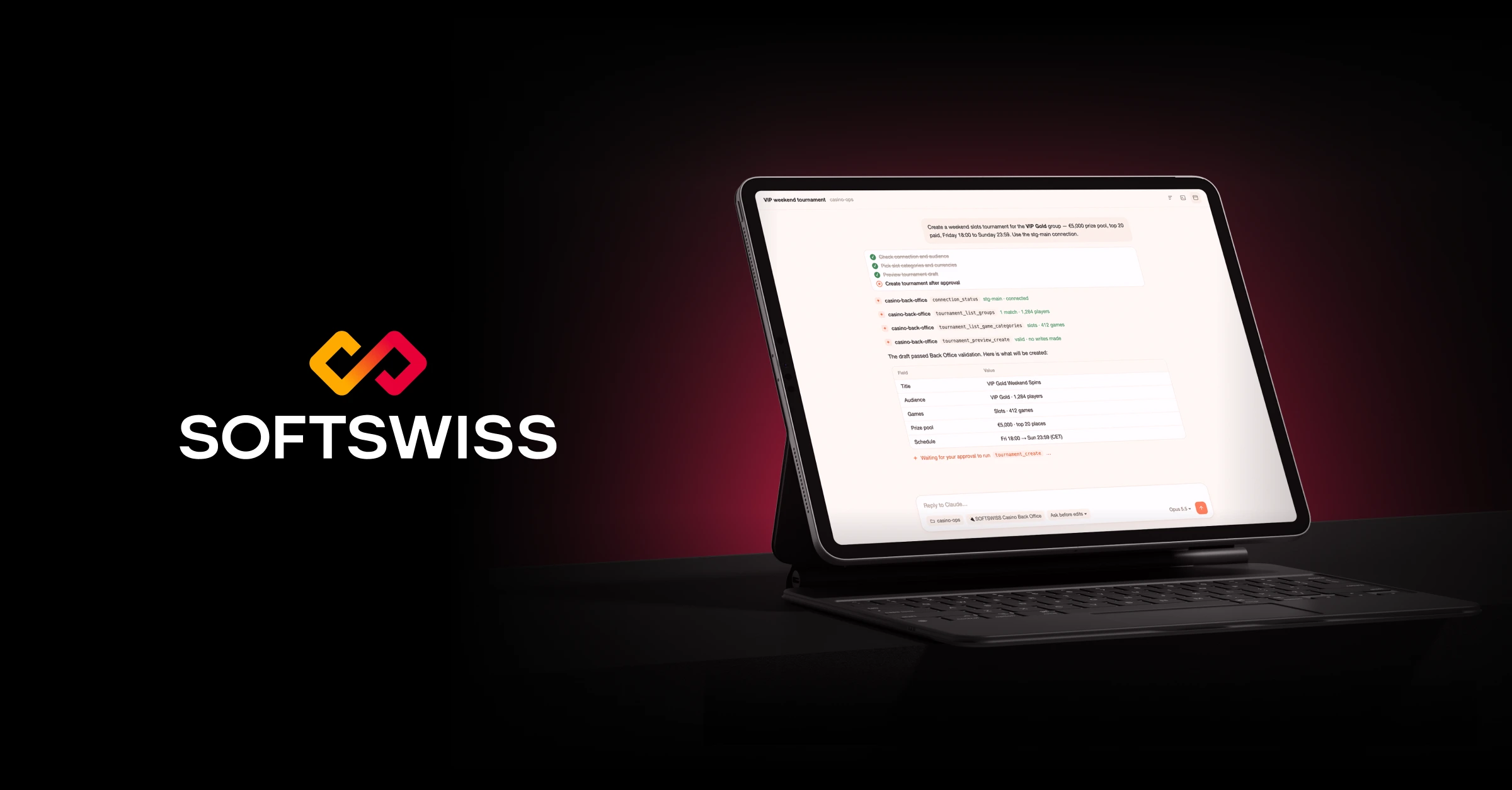
SOFTSWISS announced Back Office AI Workflow for its Casino Platform on 30 October 2026. The feature lets authorised casino staff describe supported administrative tasks in natural language and have the platform carry out configuration steps rather than only suggest what to do.
Its example workflow prepares a promotional tournament in one conversation: the assistant creates a target player segment, configures tournament settings and drafts the related content-management page. This is an operator-side tool, not a new casino game or a player-facing AI chat service.
Which tasks are supported
The announced functions include player filters and segments, tournaments and lotteries, changes to supported existing bonus settings, game-lobby configuration, CMS content preparation and selected player-data retrieval. Access remains subject to the user's existing permissions.
The company says tournament activation and publishing new CMS pages still require direct human involvement. The assistant operates within existing back-office access permissions, so the announcement is not a claim that AI can independently launch promotions or override staff authorisations.
What the announcement does not establish
SOFTSWISS says the workflow could reduce repetitive configuration work and shorten campaign preparation, but it has not published independent before-and-after measurements for operator staffing costs, campaign turnaround times or player outcomes.
The company planned demonstrations at SiGMA World Rome on 2 to 5 November. The release does not identify a list of casino brands that have deployed the feature in production, nor does it show that responsible-gambling checks or approvals have been automated. Operators evaluating it should distinguish preparation from approval and confirm the permissions and audit trail used for sensitive player operations.